Fail on purpose & other ways to make your classroom unforgettable.
These are the most important teacher moves I know for creating and holding learning spaces — forged across so many classrooms.
At the same time, you’ll get a fly-on-the-wall look into my Sovereign Storyteller classroom. Take this essay as a case-study, a campus tour, or an op-ed for your evening read. I hope it illuminates what’s possible for you in your work with humans.
Here are my 5 best practices for making your learning spaces your students’ most important classroom.
Fail out loud on purpose early on.
Make every single learner (with all their layers) important all the time.
Talk to your people early, often, and independent of if they talk back.
Protect what is sacred.
Let them teach.

1. Fail out loud on purpose early on.
This might be the single most important pedagogical move I make – a direct antidote to so much of what happens in coaching, wellness, and academic space that replicates capitalistic competition and not-enoughness.
I discovered on accident in the high school classroom that making mistakes in front of my students —and staying cool through it— is the fastest way to welcome everyone’s fullest humanity into the space.
So now I always aim to make our flawed, tender, sacred humanity safe to exist without competing, pedestaling, or vying to win external approval, the moment a new class is in session. It’s a portal to everything else important that comes next.
To be very fucking honest, it’s not hard for me to fail. I am a magnificently flawed human who has spent the last decade untangling my worthiness from any sense of productivity or perfection. (Still a work in progress.) But I wear my mistakes as a pedagogy of love on my sleeve, with a healthy dose of humor and groundedness.
What does that look like in my online classrooms?
It might be something small – a scheduling mix-up, saying someone’s name wrong, showing up late, coming with low energy, not having the thing I said I was gonna have. And I name whatever “imperfection” is in the room and then model both repair for the collective and compassionate self-responsibility for myself.
I’m intentional about not passing off the burden for assuaging my feelings onto my class; instead I make my process of self-resourcing and righting the wrong visible (and usually pretty unobtrusive – my past students might not have even noticed this was happening).
But let’s dig a little deeper into how this pedagogy serves stickier areas – moments where teacher-egos might show out if they aren’t as practiced or intentional in failing on purpose.
On coaching calls, at some point I will read someone wrong — not intentionally, it’s just inevitable because I’m not omniscient. Or I might approach someone’s situation with a mismatched tone — and their response to me getting it wrong shows.
In just about every situation where I’ve been in the student seat, I’ve experienced this same thing with a coach, mentor, elder. I’ll feel misunderstood and it stings. In the past, I often didn’t feel like I had any power or right to adjust their perspective of me — if I did, it came out sounding defensive, which didn’t feel good either.
For many of us sensitive humans, we want to be a “willing learner” but sometimes that starts to look like self-abandonment and self-silencing, especially when we’re in asymmetrical relationships of power or status.
I carry these stories with me when I step into the coach’s role. And I aim to design pathways for something different to emerge, something much more reciprocal and empowering.
So I look for the subtle bracing, blank looks, and contractions that happen when my words land askew. And instead of doubling down on what I’m offering as being valid advice, or sidestepping the elephant in the room altogether, I do this instead: I gently, calmly notice out loud how I may have gotten it wrong. (My body language here matters so much — it’s important that everyone in the room somatically feels my self-resourcing, rooting, and okayness with having made a mistake as I move through the process of repair.)
I center my students’ self-knowing and gently invite them to voice their sovereignty and discernment — in whatever way feels possible, which doesn’t always include verbalized language in that moment.
It’s this relational vulnerability witnessed and felt that sends tap roots of safety and permission all around the learning community. Now that I’ve failed out loud first, we all have the permission to make mistakes and the evidence to know we can survive it gracefully, lovingly, and generatively.
It’s palpable — at least to me because I’m watching for it. Once I’ve demonstrated making a mistake, suddenly the collective race for everyone to prove their self-development, learning, and spirituality is waved off. Now, we all get to show up and play, meaning-make, and co-create together on reciprocal footing — our flawed humanity safe to exist here together.
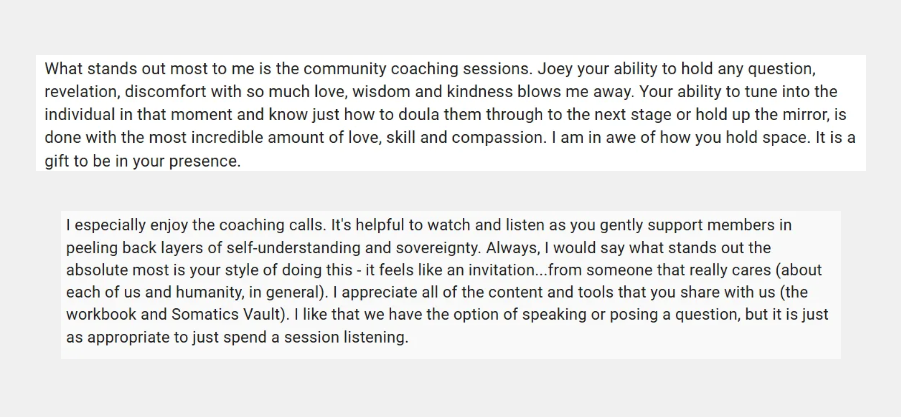
While no one has named this pedagogical move as the reason why they’ve enjoyed my coaching, I maintain that this is the thing that changes everything. It’s the biggest exhale when I take care of being the fuck-up first for all of us.
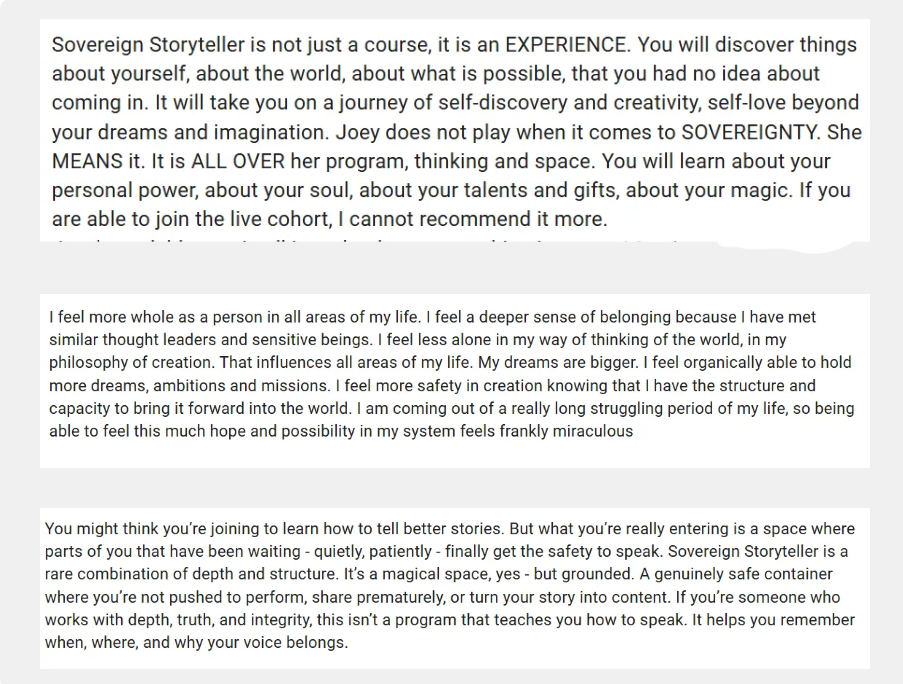
Maybe I’m wrong 😉— I’d love to hear what my students think. But that’s just my working theory for why students have shared words like these.
2. Make every single learner (with all their layers) important all the time.
Most collective spaces unintentionally center some people over others. Programs cater to individuals at a certain stage without directly accommodating those at other stages. Certain identities get automatically centered. Usually the person with the least-contested intersections of identity — the least cellular memory of visibility leading to harm — takes up the most space.
My work in schools in the past focused on inclusive curriculum-design. I was always solving for: How can one learning space hold multiple pathways for learners of different levels, entry points, interests, and needs? How can we make it safe, supportive, equitable, culturally-responsive for every human in this learning community?
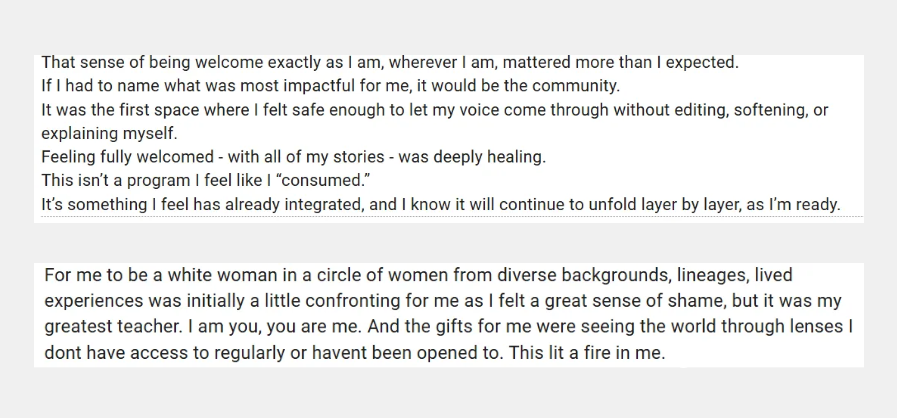
In Sovereign Storyteller, I bring this into the design to help every learner feel like their whole self — all their layers, wherever they are on their journey, and whatever they are experiencing right now — is not only welcomed into the space, but is necessary to our collective learning.
So what does this look like as pedagogical design?
We always start with identity and rooting. I lead diverse cohorts into relationship with themselves and one another with protocol that grounds each of us into our lineage, place, and roles.
We practice step up and step back — thinking about whose voice is being heard and whose isn’t. Each student practices relationality and reciprocity so that a culture of inclusion and genuine consideration is woven from the very beginning.
Now that our inherent identities are safe to learn here, how do we make space for our dynamic selves — day to day learning needs, energy levels, and interests?
Let’s peek into our weekly writing calls for an illustration.
To make learning sovereignty tangible, I give students multiple ways to engage with every exercise. During somatic practice, you can engage with camera on, with camera off, do it standing, do it sitting, don’t do it at all.
During protected writing time there are always options — work on course material, write the prompt of the day (a class favorite exercise), work on their own ongoing projects, do zero writing — take a nap!
During share-out time, we welcome reflections on any type of work — you don’t have to have completed some prescribed task to be celebrated in our space. You can also share on camera, off camera, on mic, through chat, or just sit and witness.
And because we root our whole cohort from the beginning on reciprocal practices of stepping up and stepping back — some days you come to be held, other days you come with more to give — all of it balancing out in the collective.
Our SS coaching calls might be the most profound illustration of holding space for the range of human experience and identity — I have yet to encounter a coaching space that covers more depth and breadth.
In a single coaching call, I might be working with somebody on their writing — improving their flow, helping them find more precise language for what they’re trying to say. Someone else comes in just wanting to be witnessed. They’re not ready to publish to the world yet, but they need to say the thing out loud in a space safe enough to practice in — to work through the jitters somatically — so they can feel more empowered to go wider.
In the same call, we might be doing very specific strategy work — workshopping a message, planning a launch, resolving the question of whether a business is ethical before getting into the mechanics of how to fill it and carry it.
And this more granular work happens right next to moments of decolonizing work. Where students of the Global Majority explore their lived realities — what it means to take up more space on their terms — while students of European descent examine what it means to exist with more awareness and reciprocity, often asking: What is mine to do in this generational moment of dismantling systems of power that my ancestors set up and that I benefit from?
Whenever someone brings something that needs guidance for healing and rearchitecting, I guide them through self-inquiry. I’m not confined to the traditional coaching model that says I can only ask a few guiding questions and wait for people to arrive at their own answers. I do redirect and ask powerful questions — but there comes a point where intuitively, and with consent, I start to pick up certain storylines or truths or perspectives I sense laying under the surface waiting to be languaged. When I work in this way, the story-holder’s consent, adjustment, and discernment is centered each step of the way.
The feedback I get from this inquiry-led coaching is often: “Thank you for putting into words what I’ve been feeling but couldn’t articulate. Thank you for saying what I felt but didn’t feel empowered to claim.” Having someone else recognize it gives permission to own it — and that reinforces in muscle memory exactly what the curriculum presents: name your truths, and in naming them, reclaim them.
All of this range of work can happen in one learning space because I allow myself with all my layers to be channeled toward the very particular work each person in the room needs. I’m able to welcome so many versions of who my students are and what they are here to do because I have designed for complexity. And I can do all of this because I let myself mess up and trust that we can repair and resource together — see #1.
3. Talk to your people early, often, and independent of if they talk back.
Community participation doesn’t happen accidentally. In a pedagogically-strong learning space, we design for engagement, not fall victim to the lack of it.
Years in the classroom shaped my understanding of what it takes to get students to buy in and participate — standing at the door greeting each one by name, approaching them at their level, getting to know each one’s story without prying, following up on specific things to show I was paying attention and I cared. I bring these lenses now to my online classrooms, refining my pedagogy to serve digital spaces.
Greeting students “at the door” looks different in virtual learning. I make intros and greetings intentional rituals at the start of every call. I also focus on welcoming my cohort in a special way when I open the async platform. Everyone is asked to introduce themselves (yes, a common practice in online communities) — but I make the prompt memorable, I go first, ask the students to respond to one another’s intros, and I lead by example. When someone posts an introduction, I reflect back as specifically as possible. I look for opportunities to keep the conversation going.
Then the deeper work kicks in. After intros, many async community spaces have a cool-off period. This is where keeping up regular teacher talk is crucial.
I set the cadence for how often they can expect to hear from me and then stick to it. For Sovereign Storyteller, this is at least a couple times per week to the whole community. (Not to mention the asynchronous coaching I engage in whenever a student posts a coaching question in the platform). The cohort gets a message from me opening each week with our weekly focus, new integration homework, and anecdotes from my own living and reflecting. Later in the week, they’ll get another message that might appear to be announcements, but it’s also a chance for me to demonstrate my own learning & reflection anecdotally.
I take every opportunity to synthesize threads happening across the learning space — referring to a golden moment in a recent call, redirecting to a rich thread of conversation happening in the community, or highlighting a cohort member’s insight or breakthrough.
I model the learning objectives I want my students to feel comfortable practicing: reflecting, synthesizing, engaging with various thoughts from different members of the community. I want them expressing their learning in real time — so I jump in first and often — a consistent invitation for them to come do the same whenever they are ready.
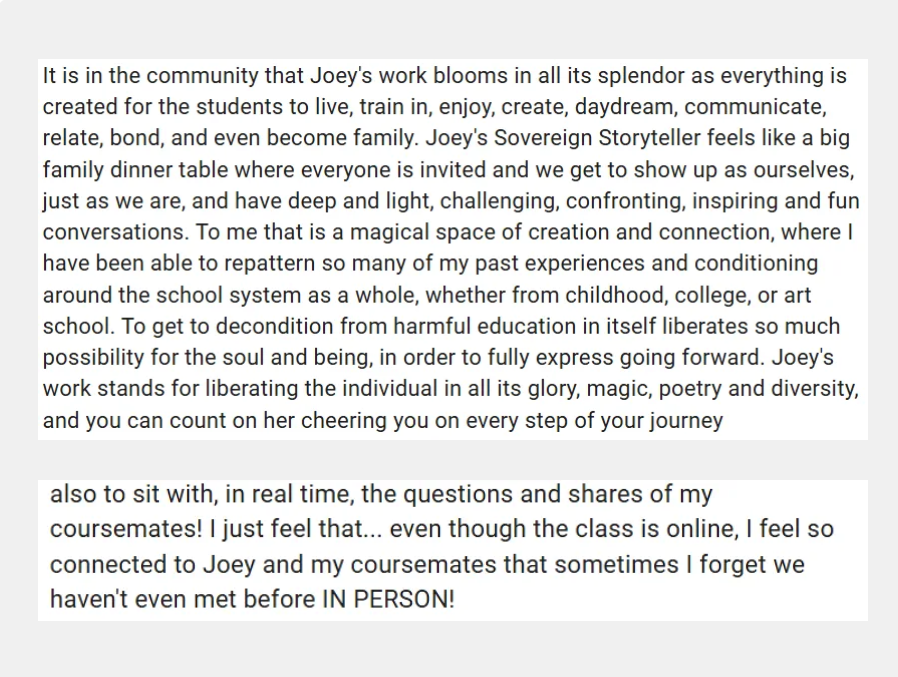
I believe it’s these practices of weaving the community engagement together over time that has led to the Sovereign Storyteller community still being active months after the cohort ended. The safe space to document and not only be witnessed, but to have other learners jump into the storyline and expand the noticing, meaning-making, and integrating became the baseline culture for our community.
Engagement grows from initiation. I gave no space for my community to be inactive. The responsibility is never on them to bring it to life for me — they get to come into the space that I cultivate every day and open up when they’re ready.
4. Protect what is sacred.
I had to learn the hard way how important this one is in online teaching. Because program-creators are often tasked with thinking about marketing the next cycle while still delivering the program to the students inside, there’s an unfortunate, rampant practice of snatching student words right from the center of an intimate share-out and making them public online.
That’s a line I refuse to cross — with my stories or my students. In my classroom, we become adept at discerning what kind of sharing empowers us rather than destabilizes us. And this one practice sharpens all of our messaging while sustaining one of our deepest needs as perceived beings — safety.
Sovereignty over what is sacred creates safety. Safety allows us to work on the deeper, most sacred spaces of our humanity. Until we learn to access to those parts, we stay fragmented and incoherent— the whole reason my people come to me —exhausted from burnout, over-exposure, hyper-masking, and compartmentalization-as-self-protection.
Integrating a practice of sacred storytelling deconditions us from performing or over-giving to fulfill others’ unfounded entitlements. Reciprocity and generosity with our voice and stories does not mean that we owe anyone intimacy or access to us. Our stories and selves are never for sale.
This lens has been deeply ingrained in me. I’ve long protected the stories I carry from being anthropologized and exploited in academia — my Hakka culture, my “inner city” students’ lived experiences, the sacred stories I was gifted by Indigenous communities who made explicit what knowledge was “for share” and what was “not for share”.
In Sovereign Storyteller (and all my learning spaces), I’m always demonstrating and protecting these protocols. If nothing else, I want the humans who gather in my classrooms to finally feel what it’s like to be perceived on their own terms.
Students sense into what is ready to share, what wants to be kept for themselves. Having ample space to explore their stories and work from so many different angles widens the field of self-expression. My students will always hear me say: “While you guard what is sacred, there’s always something else within reach, ready to be shared.”
The whole program is evidence that we still have so much to be generous with, even if we don’t share it all. And that when we honor what is sacred, we are that much more rooted into our agency, power, and creative license to choose what we offer to the world — embodying that Erykah Badu spirit of “I’m an artist and I’m sensitive about my shit”.
Yes, storyteller, be so sensitive about your shit, your vision, your stories, your voice. You keep your sensitivity intact by holding it right next to your powerful discernment and sovereign choice. YOU choose what gets shared and what’s kept for just you and your spirit team, whoever or whatever that means for you.
5. Let them teach.
I wrote here a few weeks ago that if you really want to learn something, you need to teach it. I always want to move my learners as deep into mastery and integration as possible.
So, they must practice teaching. They must integrate experience themselves as the knowledge-holder all the time.
Sovereignty is not just a buzzword in this program. Moments to discover and integrate your whole self, your knowing, and your choosing is built into every layer.
From how you receive my coaching, to the ways you approach an integration project, to how you move through the modules, to how you share your work — everything is designed for you to practice going to your own knowing, desire, and choice as your first and best source.
Self-knowing is designed into the mundane of the program. We have weekly opportunities to be in small group discussions, student-led moments of dialogue and discovery. The async community has a dedicated channel for share-outs and a dedicated channel for stories. On coaching calls, there are often intuitive moments where the collective consents to a multi-voice dialogue and rich perspectives are shared out by so many humans. Every call is started with casual whole-group share-outs of good things (I can’t tell you how many good things my students put me onto in these shares.) All of these practices become a gold mine of collective insight and teaching.
This whole SS cohort experience is designed to strip away the capitalistically-conditioned programming that keeps us stuck in the insatiable quest for whatever it is that is outside of ourselves – more knowledge, more credentials, more validation.
Look, I am a pretty amazing coach and teacher — it pains my Asian self to say. But what makes me a good teacher is not being the singular source of knowledge in this room. The most powerful thing I teach year after year is for students to become their own fine-tuned, multiple-perspective-holding, intuitive, collective-minded, scientific, sovereign source of their best, truest, and most sustained knowing.
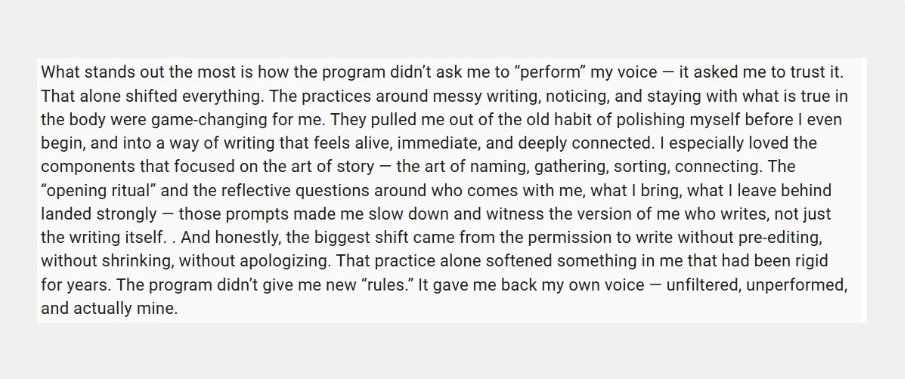
Sovereign Storyteller is a space for each student to teach themselves who they are, what they hold, what they are here on earth to do. And then have the capacity, skills, and tools to go do that, in their own creative, powerful way. I'm watching students birth their life's work, relaunch businesses they'd almost abandoned, speak up in spaces they never thought were theirs. Each story evidence of a human who has reclaimed their right to be exactly who they choose to be.
I’ve shared my 5 best teaching moves — at least the ones I’m claiming for now.
If you found anything helpful here, I’d love to know.
If this has made you curious to learn more about Sovereign Storyteller, you can explore here or send me an email with your questions to: hello@drjoeyliu.com
And if you’re ready to learn here, hit the button below to apply to this year’s cohort. I can’t wait to have you.
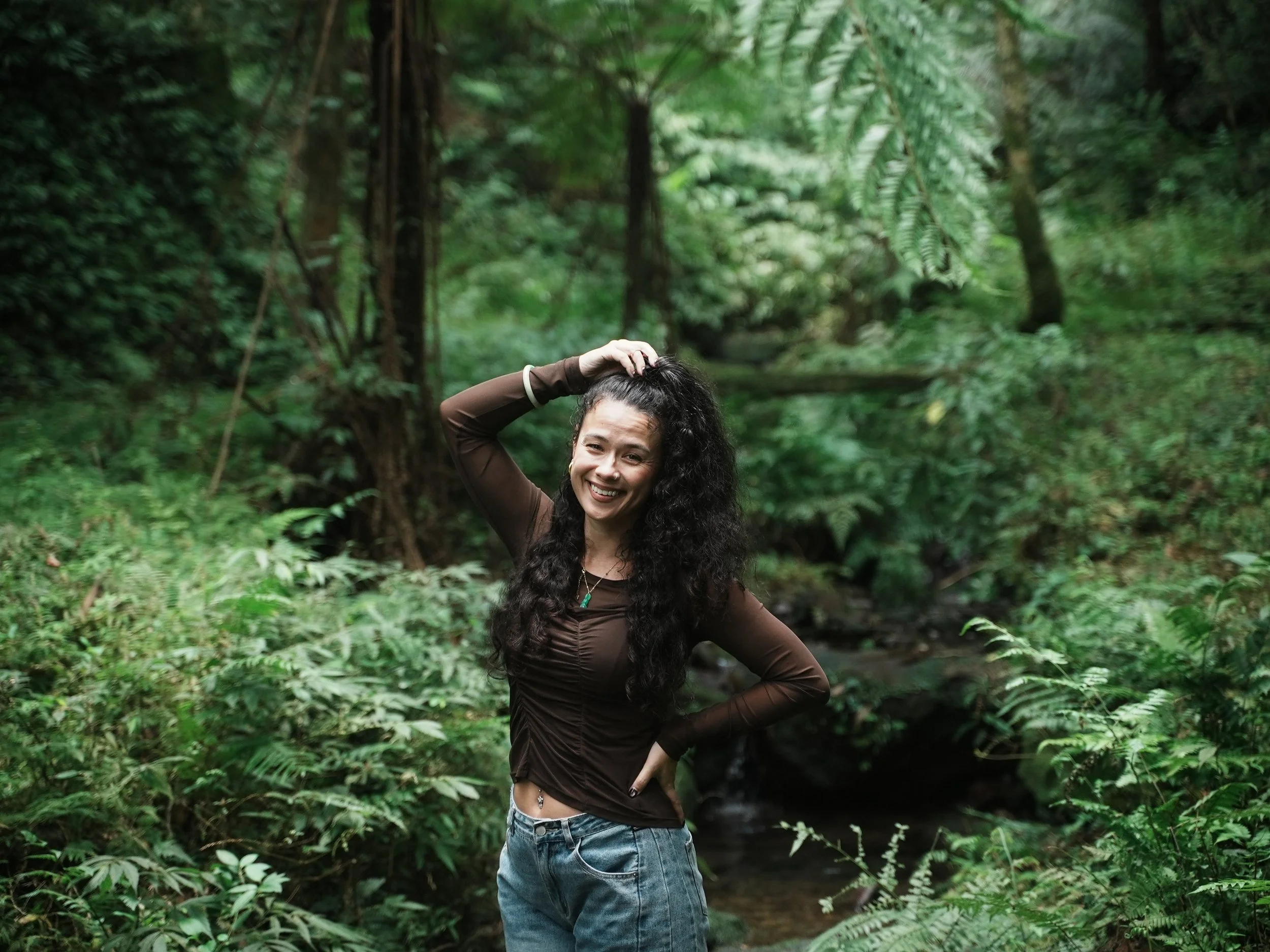
I’m Joey! A educator, healer, trauma-survivor, writer, and mama. I think a lot about how we can become the people we need to shift paradigms & sustain a healthy world. My work intersects with decolonizing, healing, storytelling, cultivating communities of belonging, & stewarding our planet. I love helping heart-led leaders craft their richest stories & channel their important wisdom into liberated self-expression.
Start learning with the free email course 6 Lessons Sovereign Storytellers Live By.